Picture this: Years ago I was hunting for my first bookkeeping client and nearly signed up for a $2,000 ad package that would've cleaned out my bank account. Instead, I stumbled upon a scrappy, data-driven way to make connections (with barely any money). If your budget's tighter than your aunt's perm, trust me - you've got options. Let me walk you through the wildcard strategies on how to get bookkeeping clients that actually worked for me, plus a few landmines I stepped on so you don’t have to.
TL;DR: You don’t need a fat marketing budget to build a solid base of bookkeeping clients - free lead tools, savvy SEO, and targeted outreach deliver way better results than most paid ads. Steer clear of high-cost, low-ROI tactics and keep it personal (and a bit unconventional).
Table of Contents
Proven Client Acquisition Strategies For Bookkeepers
If you’re just starting out as a bookkeeper or looking to grow your client base, I want to share the exact strategies that have worked for me - and for the bookkeepers I’ve coached. My earliest client wins didn’t come from fancy software or expensive ads. They came from raw persistence and a willingness to do what others wouldn’t: reach out, follow up, and have real conversations. Here’s how I landed clients, and how you can too, without breaking the bank.
Start With Persistence, Not Perfection
When I first began, I didn’t have a big budget or a slick website. What I did have was grit. I made a habit of reaching out to local businesses - dentists, roofers, plumbers - by phone and email. The key was personalization. Forget generic templates. I took the time to research each business and referenced something specific about them in my message. This approach got me replies when mass emails didn’t.
“Personalized emails and calls outpace generic templates - everyone appreciates a real conversation.”
Small, Targeted Lists Beat Mass Blasts
One mistake I’ll never repeat is blasting out hundreds of emails at once, hoping something would stick. It’s a waste of time and energy. Instead, I focus on small, targeted lists - think 50 to 200 leads in a specific niche and area. For example, I might target “dentists in Fort Lauderdale” or “roofers in Miami.” This lets me tailor my outreach and stand out from the noise. Quality always beats quantity.
- Research your niche and location
- Build a list of 50–200 businesses
- Personalize your outreach for each contact
Leverage Free Tools: The SEO Client Finder
Here’s a shameless plug, but it’s truly a game-changer: my free SEO Client Finder tool. I built this to help bookkeepers (and other service pros) find leads fast and cheap. Using this tool, I once generated 72 prospects for just 12 cents. No joke. Here’s how it works:
- Go to my website and grab the free SEO Client Finder checklist.
- Follow the setup instructions - no tech skills needed.
- Choose your industry and location (like “roofers in Tampa”).
- The tool scrapes Google’s map pack and organic listings, giving you business names, phone numbers, addresses, and websites - everything you need to reach out.
This method is far superior to buying expensive lead lists or running ads when you’re just starting out. You can get hundreds of targeted leads for a couple of bucks, and you control exactly who you contact.
Why Intent Matters: Local SEO And Social Media
Once you have a few clients, invest in local SEO. Ranking your bookkeeping business in Google’s map pack and organic results brings in high-intent leads - people actively searching for your services. I’ve seen ROI of $5 to $8 for every $1 spent on SEO, compared to $1.25 for paid ads. Social media ads (Facebook, Instagram) are cheaper but bring lower-quality leads. LinkedIn is solid for B2B, but costs more. TikTok? Don’t waste your time there for bookkeeping clients.
Bottom line: Persistence, personalization, and smart tools are your best friends for landing bookkeeping clients - especially when you’re on a budget.
Local SEO: How To Position Yourself As The Go-To Bookkeeping Professional In Your Area
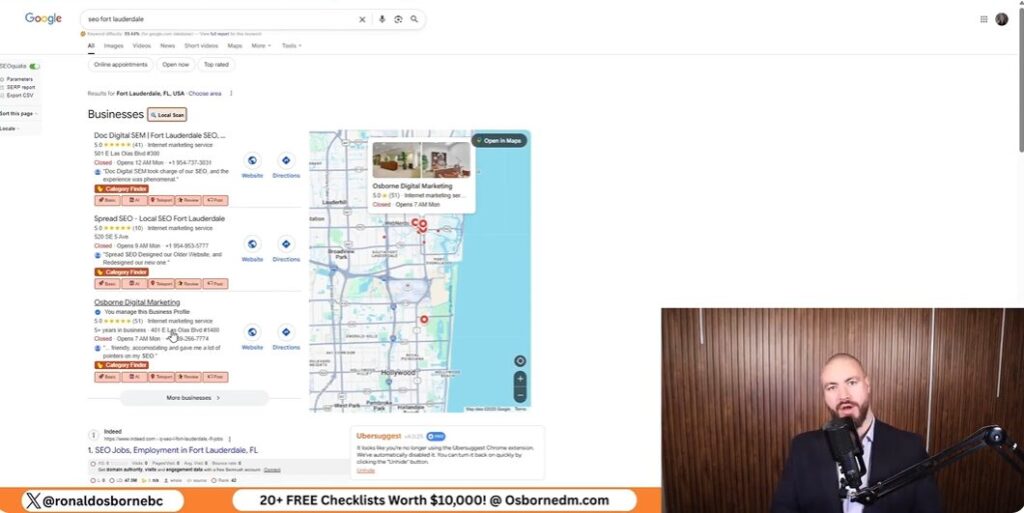
When I started my Fort Lauderdale branch, I knew I didn’t want to burn cash on ads just to get my first clients. Instead, I doubled down on local SEO - and it paid off big time. My business now ranks in Google’s map pack for “bookkeeper Fort Lauderdale” and related searches. The result? Dozens of leads rolling in each month, all without spending a dime on ads. If you’re looking for the fastest, most cost-effective way to become the top bookkeeping professional in your area, let me walk you through exactly how I did it - and how you can, too.
Why Local SEO Beats Paid Ads Every Time
Here’s the truth: Paid ads are a hamster wheel. You pay, you get leads. Stop paying, and the leads dry up instantly. With local SEO, once you rank, you stay there. You’ll keep getting calls and emails from interested clients for pennies on the dollar compared to what you’d spend on Google Ads or Facebook. In my experience, SEO delivers the highest ROI for bookkeepers. For every $1 I’ve invested in SEO, I’ve seen $5 to $8 back. Compare that to the razor-thin margins of paid ads, and the choice is obvious - especially if you’re on a tight budget.
How I Got My Bookkeeping Business To Rank Locally
- Google Business Profile Optimization: I claimed and fully optimized my Google Business Profile. I made sure my business name, address, and phone number (NAP) were consistent everywhere online. I uploaded real photos, added service descriptions, and posted regular updates.
- Local Citations: I listed my business on every reputable local directory - Yelp, Yellow Pages, Chamber of Commerce, and industry-specific sites. Consistency is key here. This helped Google trust my business and boosted my map pack rankings.
- Reviews: I asked every happy client for a Google review. More reviews = more trust = higher rankings. I made it easy by sending a direct link and even offering a small thank-you (like a coffee gift card).
- On-Page SEO: I optimized my website for local keywords like “bookkeeper Fort Lauderdale” and “Fort Lauderdale bookkeeping services.” I made sure my city and services appeared naturally in my homepage, service pages, and meta descriptions.
- Local Content: I created blog posts and FAQs about bookkeeping topics specific to my area - like “How to Prepare for Tax Season in Fort Lauderdale.” This not only helped with SEO but positioned me as the local expert.
Pro Tips For Bookkeepers On A Budget
- Start with SEO - skip the ads. If money’s tight, focus all your energy here. It’s slow at first, but the long-term payoff is unbeatable.
- Track your rankings and leads. Use free tools like Google Search Console and Google Analytics to see what’s working.
- Don’t neglect your Google Business Profile. Update it monthly. Add new photos, respond to reviews, and post updates to stay active in Google’s eyes.
“SEO has the highest ROI in client acquisition for bookkeepers - my numbers don’t lie. If you want to be the go-to in your area, local SEO is where you start.”
Platform Showdown: Paid Ads Vs. Organic (With Real Numbers)
When it comes to landing bookkeeping clients, the platform you choose can make or break your budget - and your sanity. I’ve tested nearly every method on how to get bookkeeping clients out there, and I want to break down the real numbers so you can make the smartest decision for your business. Here’s what you need to know about paid ads versus organic strategies, based on my direct experience helping bookkeepers grow their client lists.
Google Ads: High Intent, High Cost
Let’s start with Google Ads. In the bookkeeping space, you’re looking at $55–$75 per click. Yes, you read that right - per click, not per lead. If you’re running a campaign with a $2,000 monthly budget, you might only get 30–35 clicks. And not every click turns into a lead, let alone a client. In my experience, you’ll often pay $60–$80 per qualified lead - sometimes more, depending on your targeting and competition.
While Google Ads deliver high-intent traffic (people actively searching for bookkeeping help), the cost can be prohibitive for most solo bookkeepers or small firms just starting out. If you’re not careful, you can burn through your budget in days without a single conversion.
Facebook And Instagram: Cheaper Clicks, Lower Conversion
Facebook and Instagram ads are much more affordable on the surface. You might pay $3–$10 per click and $15–$30 per lead. Sounds great, right? The catch: these leads are often “cold.” People scrolling through social media aren’t actively looking for a bookkeeper. In my tests, it usually takes three to five Facebook leads to land one actual client, compared to Google’s higher conversion rate.
So, while you’ll spend less per lead, you’ll need more leads to close a deal. If you’re tight on cash, it’s tempting - but be prepared for a lot of tire-kickers and time-wasters.
LinkedIn: Pricey, But Powerful For Niches
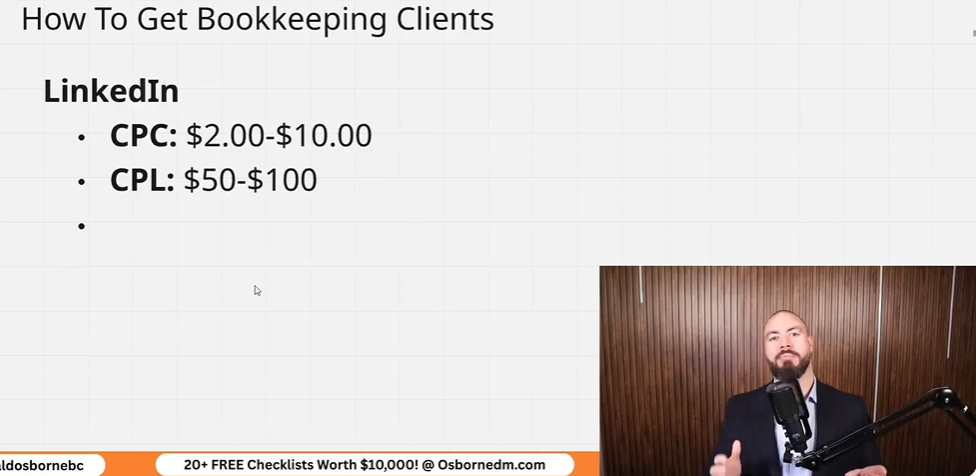
LinkedIn is my go-to for targeting high-value niches. The cost per click is higher - $8–$15 per click - and leads can run $40–$80 each. But here’s the upside: you can laser-focus your targeting by industry, company size, and even job title. If you want to work with law firms, dentists, or tech startups, LinkedIn lets you reach decision-makers directly.
When I run LinkedIn campaigns for bookkeepers, I often see a conversion rate of 10–15% - much higher than Facebook. If you’re willing to invest, this is where I’d start with paid ads, especially if you have a clear niche.
TikTok: Cheap Clicks, No Real Clients
It’s tempting to try TikTok because the cost per click is often under $1. But after running multiple tests, I can say with confidence: don’t bother. The audience just isn’t looking for bookkeeping services. I’ve never landed a quality client from TikTok, and neither have any of the bookkeepers I coach. Save your time and money for platforms that actually convert.
Organic SEO: The Long Game Winner
Now, let’s talk organic. With local SEO, I’ve seen bookkeepers spend $500–$1,000/month and generate dozens of leads- often at a $5–$8 return for every $1 spent. Once you rank, those leads keep coming in without the constant drain of ad spend. Plus, the intent is sky-high: people searching “bookkeeper near me” are ready to hire.
Bottom line: If you want sustainable, high-quality leads, organic strategies like SEO and my free client finder tool are unbeatable for ROI.
Social Media, Freebies, Community: Building Trust Without The Hard Sell

If you’re like me, you probably cringe at the idea of “hard selling” your bookkeeping services on social media. The truth is, most people don’t want to be sold to - they want to learn, connect, and trust before they ever consider hiring you. Over the years, I’ve found that building trust through educational content, strategic freebies, and real community engagement is far more effective than aggressive pitches. Here’s how I’ve done it, and what I’d recommend for any bookkeeper looking to land quality clients without feeling pushy.
Lead With Value: Educational Content And Free Consultations
The fastest way to get attention - and respect - is to teach, not sell. I regularly post simple, actionable tips on my social channels: think “3 ways to prep your books for tax season” or “How to spot cash flow leaks.” These posts don’t just show off your expertise; they help business owners solve real problems. Every time I offer a free 15-minute consultation or share a downloadable checklist (like my client finder tool), I see a spike in DMs and email inquiries. People appreciate the no-strings-attached help and are far more likely to remember you when they need a bookkeeper.
Build Credibility: Share Success Stories And Testimonials
Nothing builds street cred faster than sharing real results. I make it a habit to post short testimonials from happy clients - just a sentence or two, with permission - on my Facebook page and LinkedIn profile. I also share quick “before and after” stories in relevant groups. For example, “Helped a local dentist recover $8,000 in missed deductions last quarter.” These aren’t bragging - they’re proof that you get results. Over time, these stories create a reputation that speaks louder than any sales pitch.
Get Involved: Join And Nurture Communities
Here’s a secret: most of my best referrals have come from being active in bookkeeping and small business support communities - not from cold outreach. I don’t just lurk in these groups; I answer questions, share resources, and celebrate others’ wins. Whether it’s a Facebook group for local entrepreneurs or a LinkedIn group for service providers, I show up consistently and genuinely. When someone asks for a bookkeeper recommendation, members tag me because they’ve seen my helpful posts. That’s how referrals happen - quietly, organically, and without the hard sell.
- Tip: Start your own free Facebook group or join one focused on local business growth. Share your knowledge, not your sales pitch.
- Tip: Offer a free resource (like my SEO client finder checklist) and invite group members to try it. This positions you as a go-to expert.
- Tip: Follow up with anyone who engages with your content - thank them, answer questions, and offer more help if needed.
By focusing on education, sharing real results, and being an active community member, you’ll build trust that leads to clients - without ever feeling like a pushy salesperson.
Fail Fast: What I’d Never Waste Money On Again (And Why)
Looking back at my journey helping bookkeepers and building my own businesses, I’ve learned that failing fast is a gift - if you take the lesson and move on. Early on, I fell into the trap that catches so many: dumping thousands of dollars into mass advertising campaigns, hoping sheer volume would bring in clients. I tried Google Ads, Facebook campaigns, and even dabbled in platforms like TikTok, thinking more eyeballs meant more business. The reality? Most of those dollars vanished with little to show for it. Bookkeeping is a trust-based service, and mass ads rarely build that trust or attract the right kind of client.
Here’s the hard truth: targeted, personal outreach is simply smarter. When I shifted my focus to reaching out directly to business owners - armed with a list of prospects tailored by industry and location - I saw a dramatic difference. Instead of chasing every possible lead, I was connecting with people who actually needed bookkeeping help and were ready to talk. The conversion rate skyrocketed, and my cost per client acquisition dropped to a fraction of what I’d spent on broad ads.
Another lesson: not all platforms are created equal. TikTok is a great place for entertainment and brand awareness, but it’s not where serious business owners go to find a bookkeeper. I wasted time and money testing ads there, only to realize the audience just wasn’t right. If you’re a bookkeeper, your ideal clients are probably not scrolling TikTok looking for help with their books. Instead, focus your energy on platforms where business owners are actively seeking services - think LinkedIn, Google, and even niche Facebook groups. The intent is higher, and the leads are warmer.
Automation is another area where I learned to tread carefully. It’s tempting to automate every part of your outreach - emails, messages, even follow-ups. But here’s what I found: automation can get your foot in the door, but it can’t replace a genuine, human connection. The best results always came when I picked up the phone and made a quick, personal follow-up call. That simple act of reaching out directly, showing you care, and answering questions in real time builds trust faster than any automated sequence ever could.
In short, I’d never waste money again on mass ads or platforms with weak lead intent. I’d skip automation that removes the human touch. Instead, I’d double down on targeted, personal outreach and genuine follow-up. These are the strategies on how to get bookkeeping clients that consistently deliver real, high-quality leads. If you’re just starting out or looking to grow, learn from my mistakes - fail fast, pivot quickly, and focus your time and budget where it counts. Your client list (and your bank account) will thank you.